Your Daughter’s First Cycle: How to Support Her With Calm, Care, and Confidence
Someone's Daughter Once Said...
Where old wives' tales meet real answers
Someone's daughter once said cramps just mean you're 'becoming a woman.'
Witnessing your daughter's first period can evoke pride, panic, tenderness, and flashbacks to your own first leak in white shorts. Here is how to be the calm in her hormonal storm - without turning into a walking puberty pamphlet.
Recognize the signs
Understanding puberty cues helps you prepare in advance. Many girls begin menstruating between ages 10 and 15, with the average around 12, though some start earlier or later. Early signs may include breast development, pubic hair growth, body odor, clear or whitish vaginal discharge, and a desire for more privacy. These changes can begin one to three years before the first period.
When you notice changes, gently bring up the topic and ask if she has questions. Keep your tone calm. Your face is part of the lesson. If you look terrified, she may assume there is something to fear.
Open, judgment-free communication
Create comfortable opportunities for questions. Share your own experiences if it helps, but do not make her responsible for your story. Validate her feelings. Excited, embarrassed, annoyed, curious, scared - all of those are allowed.
Avoid phrases like 'you are a woman now' if they add pressure. Instead, say, 'Your body is changing, and I am here to help you understand it.' That gives her support without making her feel like she woke up with a mortgage and a Costco membership.
Practical preparation
Stock the bathroom with pads, panty liners, wipes, and extra underwear. Pack an emergency kit for school with pads, clean underwear, wipes, sanitizer, and a small snack. Show her how to use each product. Pads go adhesive-side down in the underwear - not on skin like a Band-Aid. Yes, this happens. No, we will not shame anyone.
If she is interested in tampons, review the instructions and remind her they need to be changed regularly. If she is not ready, do not push. Period underwear and menstrual cups can be helpful options later once she understands her flow.
Teach what's normal and when to seek help
Cycles are often irregular at first. She may have one period and then not have another for a while. Over time, cycles usually settle into a pattern. Teach her to notice what is normal for her body.
Seek medical guidance if periods are extremely painful, cause missed school or activities, involve very heavy bleeding, last longer than seven days, or if her period has not started by the age your healthcare provider recommends discussing it. Pain should not be dismissed as a rite of passage. Comfort matters. So does medical care when something feels off.
Encourage healthy habits and self-care
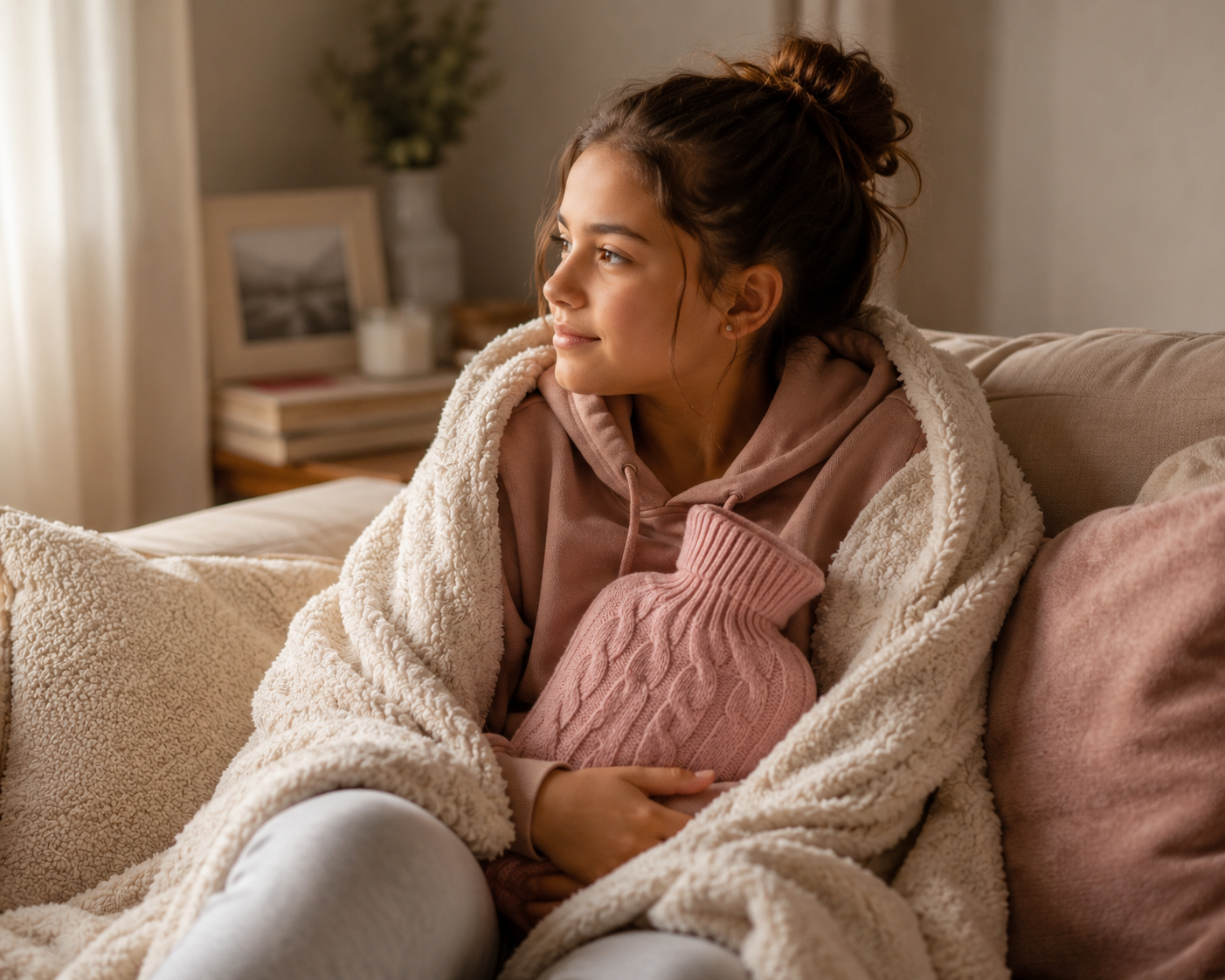
Periods should not automatically sideline her life. Gentle movement, hydration, nutritious foods, rest, and deep breathing can all help. A warm bath, heating pad, or hot water bottle can make cramps feel more manageable. Herbal tea can help the moment feel calmer, even if it does not magically solve adolescence. Nothing does. Not even Wi-Fi.
Support at school and beyond
Discuss bathroom policies, identify the nurse's office, and talk through what to do if she starts at school. Encourage her to track her cycle on a calendar or with an app appropriate for her age and privacy needs. Remind her that leaks happen. She is not the first, and she will not be the last.
Always be in her corner
The goal is to help her feel seen, supported, and capable. Encourage her to speak up about discomfort and preferences. At Someone's Daughter & Co., we love pairing a warm drink, a soft blanket, and a simple check-in with practical period care. Sometimes the most healing thing is not a speech. It is presence.
Someone's Daughter Says: Try This Now
The Check-In Question. Tonight, instead of asking 'How was your day?' try: 'Did your body do anything annoying today?' It is lighter than 'How's your period?' and it gives her an easy opening to mention cramps, leaks, or moods without making it A Whole Conversation.
Download this FREE Resource Guide: When My Body Feels Off
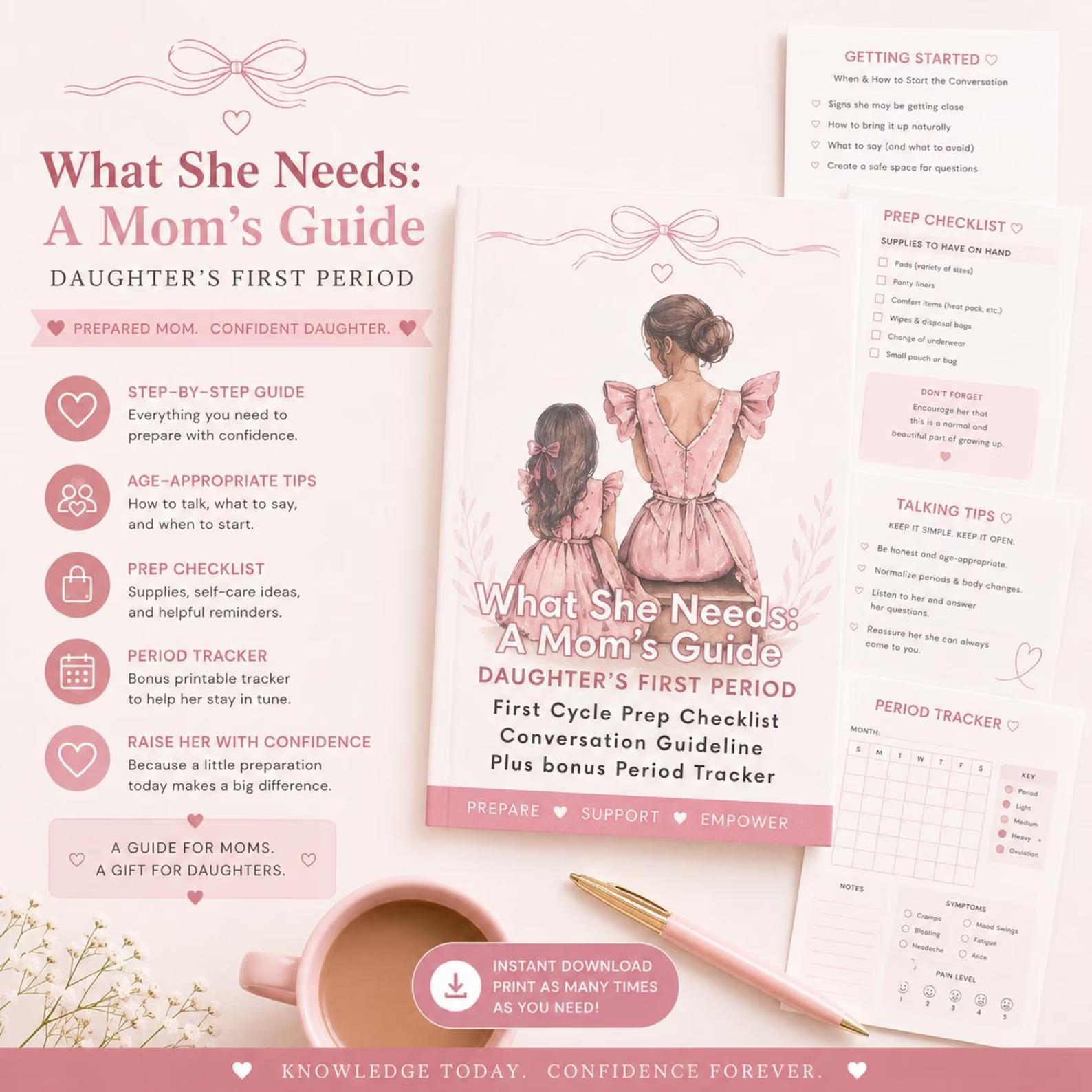
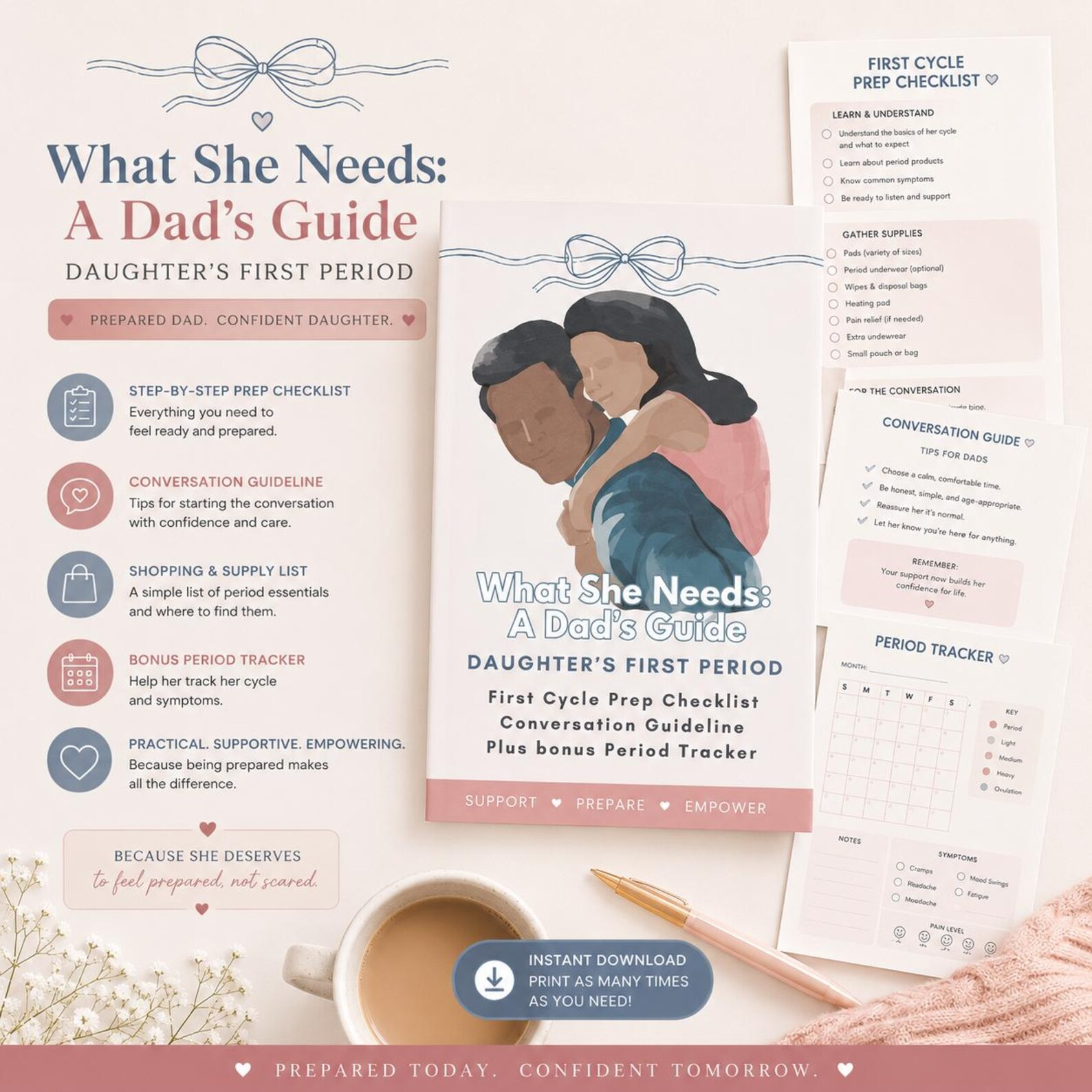
Need More? Here’s our First Period Guides for Moms or Dads